
Hayley is undertaking a PhD at Sydney Uni and has chosen to undertake a writing residency at RAYGUN for the next weeks.

Hayley is undertaking a PhD at Sydney Uni and has chosen to undertake a writing residency at RAYGUN for the next weeks.
The master of filling space with light, or rather colour, that is light, that he uses to fill space.
From the Guggenheim Museum 2013
 image from http://www.bustler.net
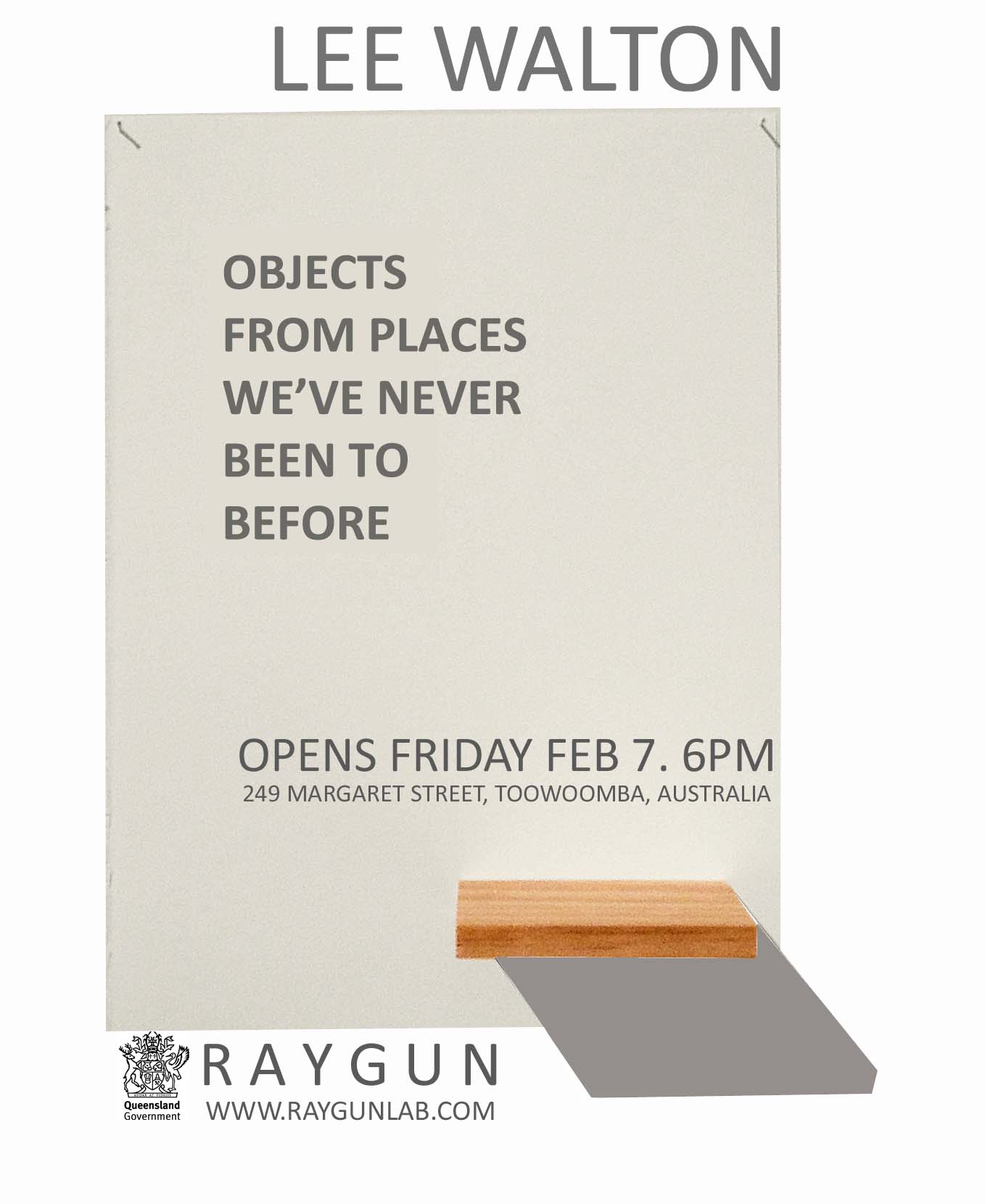
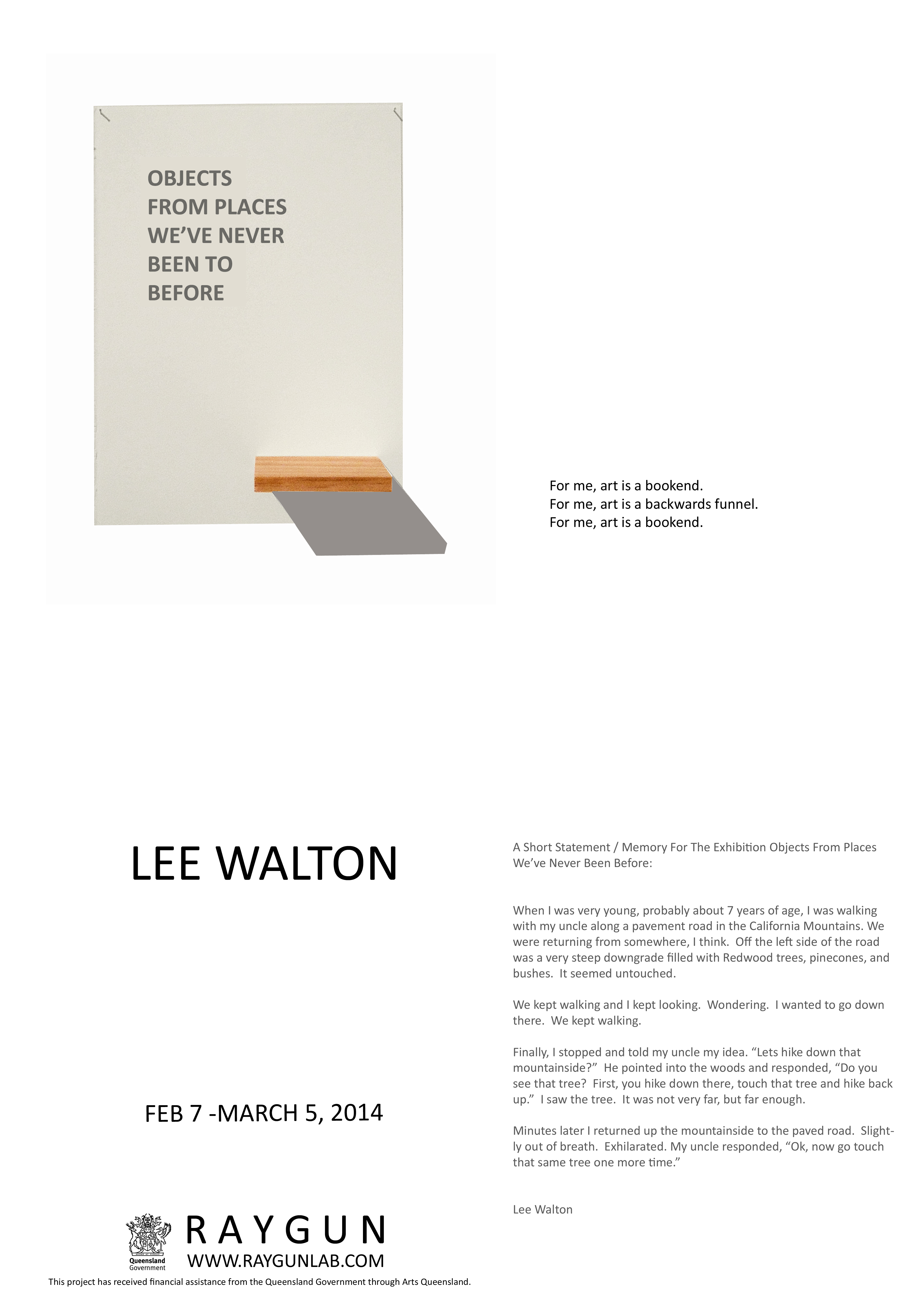
Lee Walton is a social practitioner from the US presenting an exhibition named OBJECTS FROM PLACES WE’VE NEVER BEEN. The exhibition is participatory with each participant nominating a site/place/destination (to be a place, shop, etc) to be visited. They will need to find an object from this place and bring it with them to the gallery on the opening night. The object will be placed on a shelf sized roughly 12cm x 12cm. There are no formal size restrictions. however the glitch is, they must make a promise to never return to this place again. Ever. We’re Super excited!
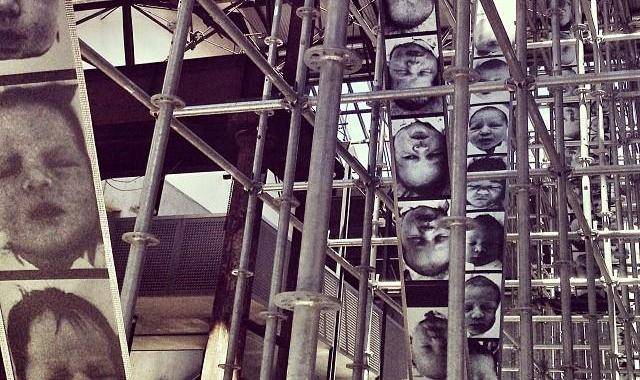
Our first post for the year is sharing from the BLOUIN ARTINFO website. I like that their home page today is what’s on offer in Australia for 2014. Happy Holidays Aussies. xx
http://au.blouinartinfo.com/news/story/998491/10-must-see-art-exhibitions-in-australia-in-2014
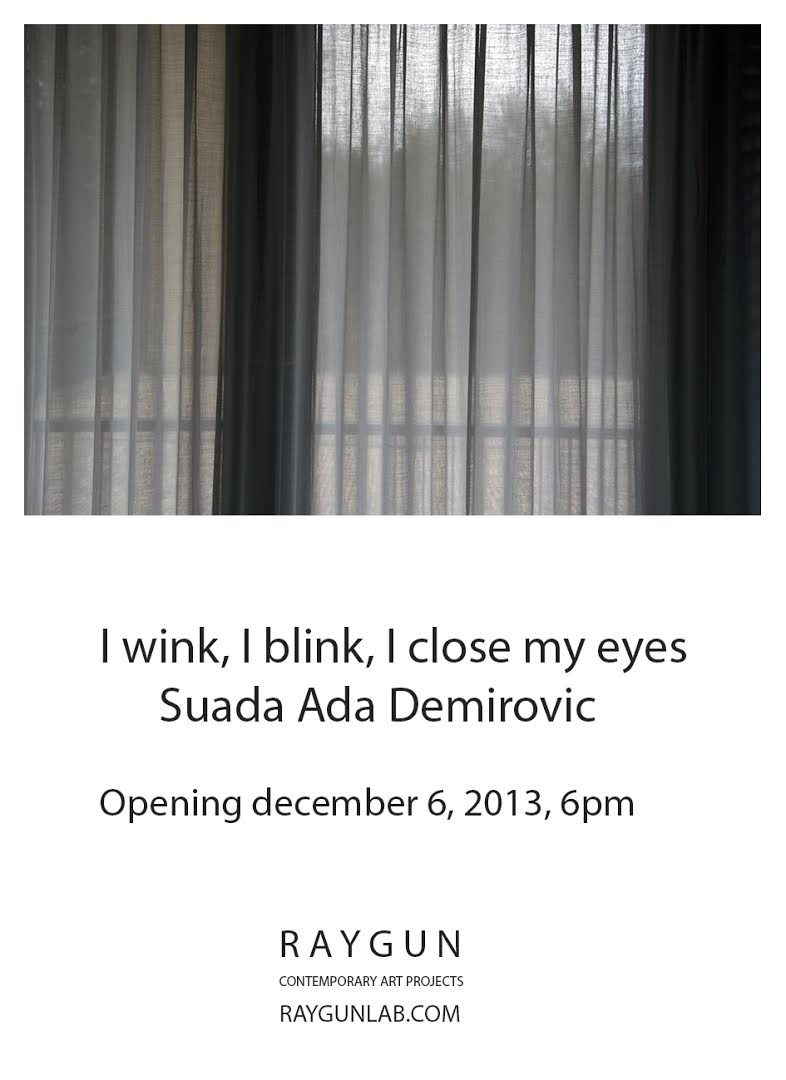
At Suadas opening, there were a series of questions asked that we have taken to Suada relating to the work.
Below is her reply.
Are you even directly involved in the imagery? if not why not?
I am not directly involved in the imagery. The “curtain photo” is not a found photo. It is taken by me and is/was my immediate environment. I took the photo last winter in my bedroom in Rome, while I was living there.
Are these found image? why is the girl in the photograph, and the dancer?
All the works (in the show) functions as fragments. Again taking a point of departure in Barthes book “A lovers discourse: fragments”
The woman in the tree is a found image. Both the “curtain” and the “found image” (woman in tree) deal with time and memory and the uncertainty of memory.
With the “woman in the tree” work I wanted to play with time. I wanted the works cut across time; past, present and possible future.
(woman in tree) I choose to transfer the image to print on paper, to remove it from its original context, meaning that it is not about the archive or the old image. For me it is about, representation as such, and I wanted the work to cut across time. I wanted this uncertainty about the imagery. I want the audience to question: Why and who is this woman in the picture? And when was the picture taken?
(woman in tree)
The title figure II: (waiting) – actually all the titles are – borrowed from Barthes. The “waiting”- position in history and literature is defined as “feminine”, because “historically it is the female who awaits”. The woman corresponds to this “awaiting”; the woman does not sit still, but is standing in a tree. The woman in the image represents a form of “suspense”. What happened before the photo was taken and happened after?
The Dancer:
Here I am interested in translation. Words are translated into bodily gestures. Love and passion according to Barthes is either expressed through language or action. I thought it would be interesting to work with a dancer, because the dancer is accustomed to using the body, interpreting music or words into movement.
The dancer reacts spontaneously to words borrowed from Barthes such as: “simulation”, “orange”, “raped” and more.
In this work I examine if it’s possible to translate what can only be expressed verbally into bodily gestures.
I used this specific dancer, because I know her teaching methods. She works at the ballet school, teaching mostly young people and children. She teaches her students how to interpret concepts such as “time” without showing it literally; as starring at the clock. I thought it would be interesting to feed the dancer words as abstract as the notion of “time”, and see how she would interpret them into gestures.
Analogue or digital photography?
Digital (single-lens-reflex) Canon 7d.
Is the curtain image your immediate environment? and why did you choose it?
Yes. See: first question.
I chose this image as an intro- image for the show. You see a curtain in the picture; on the other side of the curtain you see an outline of a landscape in color. Again the idea was to play with memory and time also as a fragment. Perhaps a clear or unclear memory. Depending on how you view it.
What section of Barthes text did you read?
I have chosen words based on what I thought had relevance or was bearing in Barthes text. The idea was to take words from Barthes text, the dancer never got a full sentence, and did not know the concept before standing in the studio, she was only asked to show up, and react/ translate whatever words I came with. So the words are taken out of context and presented as single words, once again fragmented and translated into bodily movement/ gestures. We are left with the actions of the body and gestures, without the words or language to accompany the understanding.
Why did you choose to exclude the words in the video?
I am still in doubt if I should or should not include or exclude text in this show. I normally use text more directly in my work. But this time, I wanted to try and see how it would work without the text accompanying the understanding.
I hope you will respond to the work. I would love to know how you view it? and how you experienced the work?
Suada
Visually and spiritually this is a beautiful thing. Taking a festive moment at RAYGUN and sharing. xx
Last nights opening was great! The work was beautiful and visitors had lots of questions which we will be asking Suada soon. The work will be up for the next month, please come and visit, it’s stunning. We’re running to Sydney this morning on official RAYGUN business but will be back in touch soon!

We love this.
Marina Abramovic and Ulay shared a great love story in the 70s. Together they performed art out of the van they lived in, forming a collective called “the other”.
When their relationship had come to an end, they went to the Great Wall of China to walk it together. Both started walking from the opposite end until they met in the middle for one last big hug before disappearing from each other’s lives.
For her 2010 MoMa retrospective, Marina performed ‘The Artist is Present’, the biggest exhibition of performance art in MoMA’s history.
During the performance, Marina shared a minute of silence staring into the eyes of a complete stranger who was seated in front of her. This is when Ulay arrived, without her prior knowledge. Watch the video below to see what happens. http://www.enpundit.com
These links will lead you to three great videos presented by Frieze about non profit spaces in Berlin, New York and London. They’re fantastic!!
http://video.frieze.com/film/berline-city-report-three-non-profit-spaces/
http://video.frieze.com/film/new-york-city-report-three-non-profit-organizations/
http://video.frieze.com/film/london-city-report-three-non-profit-spaces/
 RAYGUN