As recommended by Devon McKnight (she knows)
comment 0
As recommended by Devon McKnight (she knows)
‘The Future’ is Miranda July’s new feature film in which she stars, it explores the way we spend our time and think about the present in the context of the future, as an average of however many years we are generally expected to survive. July uses film as a medium in the same way she uses text or performance and touches on the idea of authorship through the artists appearance in performance works functioning in a similar way to her own appearance in the film. July is described as a filmmaker, artist, writer and explores ideas through whatever medium is appropriate to communicate her ideas.
I first read about the Schindler house in relation to Fritz Haeg and the Sundown Salon working with the mak centre organizing projects in and around the buildings unique architecture. Architect Rudolph Schindler (worked with Frank Lloyd Wright) designed the structure in the late 20’s, the house became a center of art and culture in LA. The house created a vibrant social and intellectual culture from 1922 to the 1950s due to the activities of Pauline Schindler, who held Salons, political meetings and dinners allowing for the reinvention of domestic space.
The architecture featured large studios instead of typical living areas, such as a lounge and dining area. The house was built with communal spaces (kitchen and laundry) but most importantly it enabled multiple activities to happen simultaneously with room for multiple makers and thinkers to inhabit the space. The building has two wings which can accommodate two young families as well as a guest studio complete with bathroom and kitchen. The house was constructed in such a way that Schindler and his wife continued living in the house even after they separated, making slight adaptions to the space there was room for them both to live independently. The architecture of the building allowed for a social dynamic full of ideas and discussion.
Gabriel Orozco works within the everyday incorporating situations or moments he happens across as part of his artistic practice. Orozco treats his surroundings and the world as his studio, and rather than operating within a designated space engages everything. In transferring everyday situations, activities and objects to form his practice. For me, Orozco allowing the person experiencing the work to engage with the work with a different set of parameters, in that they have experienced many of the materials and situations previously, this allows the work to begin to bridge the gap between the everyday object or situation and high art.
DURING OCTOBER RAYGUN IS SHOWING KYLE JENKINS WITH PAINTINGS FROM FANO/COPENHAGEN
The show opens on October the 6th at 6PM at RAYGUN contemporary project space. Images and more information are coming soon.
So after reading through the last blog on Fritz Haeg and having had a look through the book it would be fitting to blog about what we are discussing right now in 2004 essay in i Documents of Contemporary Art on the idea of how relational art sets out to create ‘objects’ as well as situations and encounters. This following quote from Ranciere’s essay as well as the collaborations at Fritz Haeg’s Salons have inspired us to develop a platform at RAYGUN which allows individuals within our community to investigate everyday situations highlighting the ‘banal’ and encouraging the idea of living in the now, together, reducing the focus on art as object.
Yesterday’s distance towards commodities is now inverted to propose a new proximity between entities, the institution of new forms of social relations. Art no longer wants to respond to the excess of commodities and signs, but to a lack of connections. As the principle theorist of this school (Nicolas Bourriaud) writes: by offering small services, the artist repairs the weaknesses in the social bond.
Participation Documents of Contemporary Art 2004 Whitechapel Gallery Edited by Claire Bishop p.90
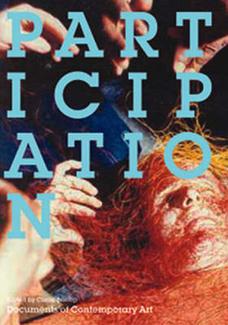
‘The Sundown Salon Unfolding Archive’ has arrived in my world recently and the more I read the more I am excited by it. It’s an overview by a project called’ The Sundown Salon undertaken by Fritz Haeg, who is an architect turned artist turned garden designer who moved to LA and held Salon’s every second Sunday in his dome-shaped home.
Haeg opens up the Salon’s for people to organise, they are described as events, shows, happenings, gatherings, meetings, pageantry, stunts, and everything in between, with a focus on creating energy and a space for LA artists, musicians, and people to share and discuss new work and ideas. Haeg therefore exists in this area between facilitator, host and artist, cooking for his guests while at the same time letting whatever happened happen.
One of the really interesting elements of the project is the notion of the ‘Salon’ which traditionally were held in homes as a place for the discussion of ideas, general gossip and meeting. Haeg describes in his introduction the beauty of having the Salons or events in his home, which by itself, because it was physically his space was enough for people to feel comfortable to engage in the discussion of ideas and speak openly about the work, music and events.
The projects are documented in the book with one side of the concertina consisting of purely imagery and the other side with interviews with Haeg and the people involved, statements by people who have attended the events and any other documentation. Each Salon is individualised with different type faces and flyers, showing the individual nature of each event, as separate and individual from the others. There are images and more information about the events on The Sundown Salon website. It’s well worth checking out. -A
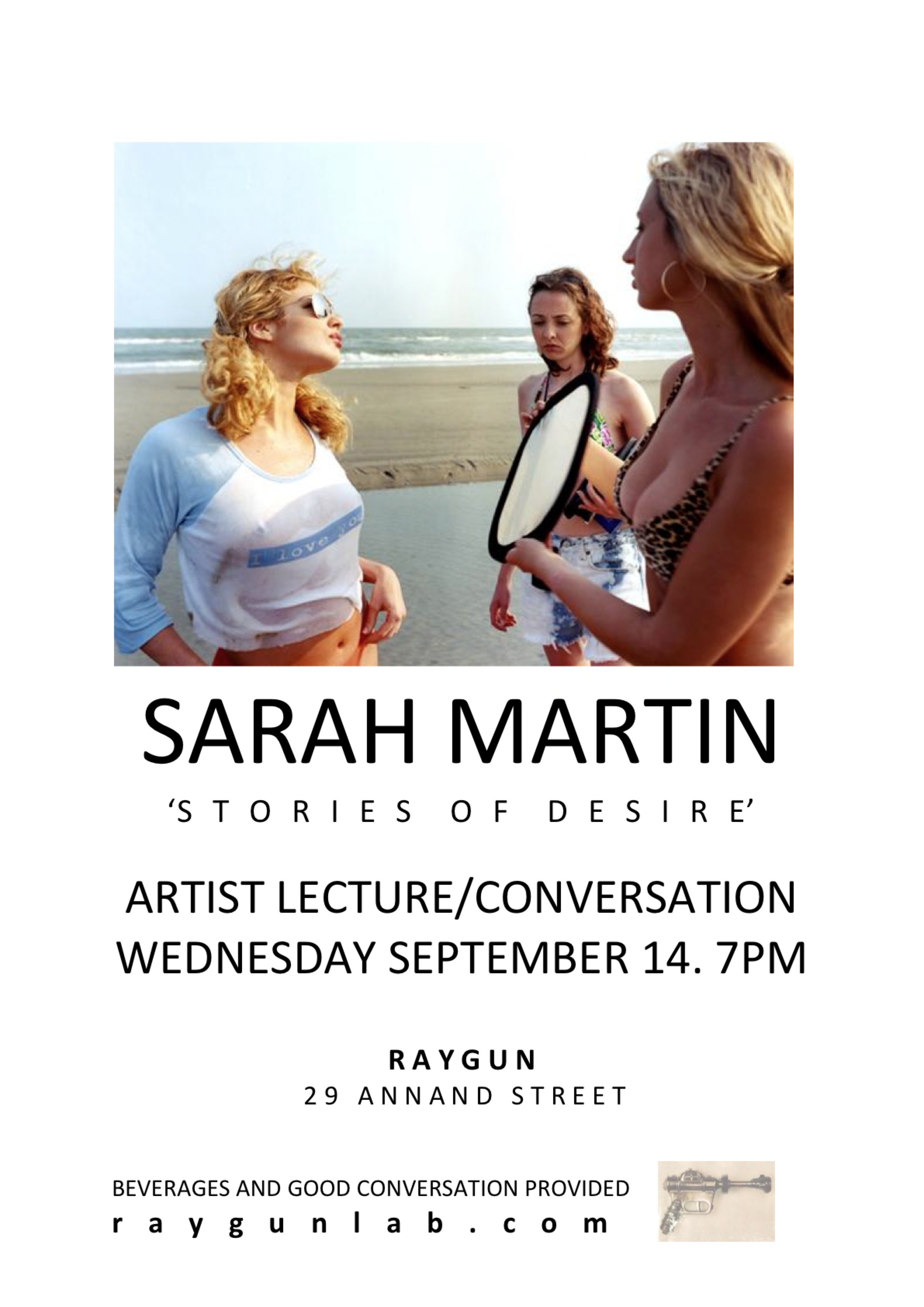
Last night we streamed Sarah Martin onto the wall at RAYGUN and spoke with her about her work via Skype. Sarah described the ideas behind her body of work ‘Stories of Desire’ which is on show at RAYGUN. Sarah’s explanation of the work was highly personal in that she discussed a raw honest foundation which has formed the basis of this series of work. Sarah explained the culture of the deep Southern American Baptist and the strict discipline and expectations held within her family which directly influenced her upbringing and therefore work. Sarah discussed the influence on her work through a push against and away from this with her time spent at Graduate School at Yale and after that New York. Sarah explores her very aware and almost non objective relationship to her upbringing through her work through ‘Stories of Desire’ which investigates themes such as living for dying, a longing to keep friends close, to be accepted. The conversation was wonderful with a few new faces and everyone asking questions resulting in stimulating healthy dialogue.
We love this French advertisement http://www.youtube.com/verify_age?next_url=http%3A//www.youtube.com/watch%3Fv%3D-p5muDCZiI0

 RAYGUN