

The ‘Sneak Peek’ section on the design sponge website documents the living spaces of people who live in interesting spaces, I love the apartments and weird and wonderful spaces people live in. New sneak peeks are added all the time, I find myself checking to see if there’s anything new. Check it out.

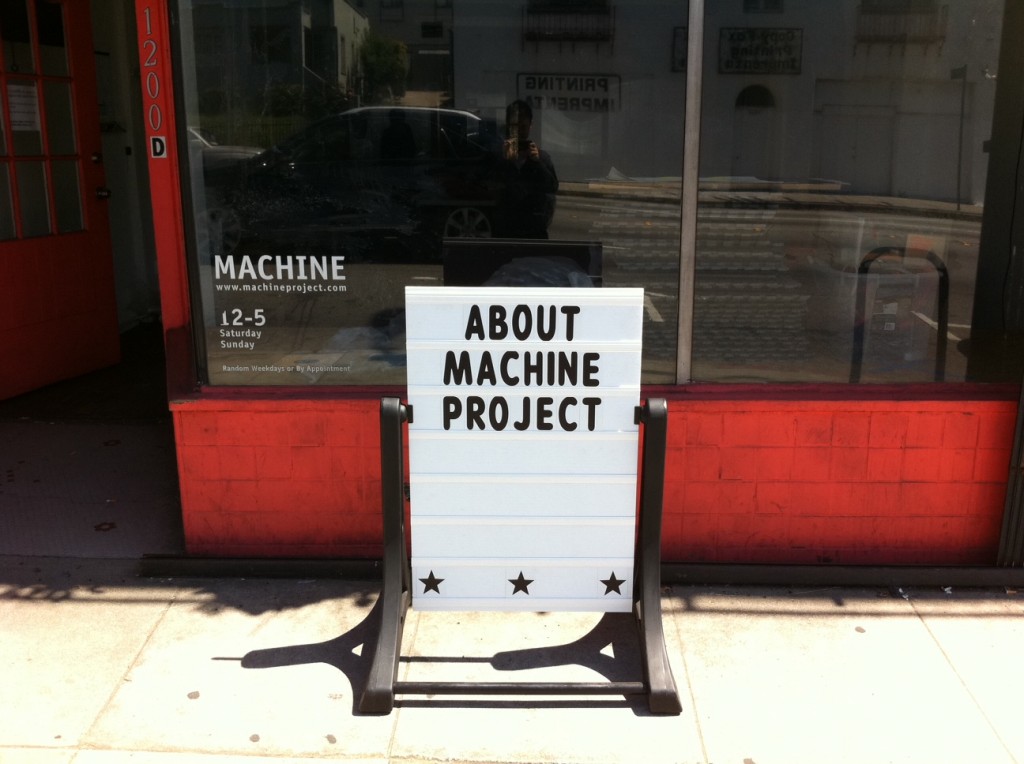
Machine Project is an incredibly awesome project located in LA. It’s a gallery used to facilitate everything else, they have public lectures about sea slugs, analogue television dying, and do other rad stuff like group naps and cheese tasting. A great book about one of their projects is ‘Machine Project: A Field Guide’ to the Los Angeles County Museum of Art – it documents Machine Project’s take over of the Museum for a day and is full of interviews with artists and documentation of the work installed which both responds to the work in the museum as well as utilizing other spaces. Projects were created like a garden on top of the elevator, student driver valet parking, and a voice hidden inside a plinth or pedestal which occasionally shouts out a comment or interjection.
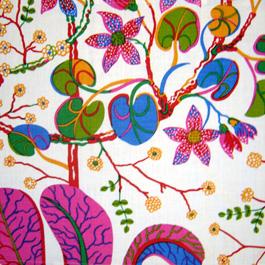
So I was talking with Ali and Sam tonight at one of our RAYGUN meetings (which always seem to involve Champagne, red wine, coffee and or chocolate) about Austrian born architect Josef Frank c 1885 – 1967 (roughly) and thought I’d share some inspiring visuals with you. Being a fabric designer I’m in awe of his innovative designs that don’t stop at fabric, but furniture and architecture as well, and look like they were created this century, this decade. http://www.justscandinavian.com/
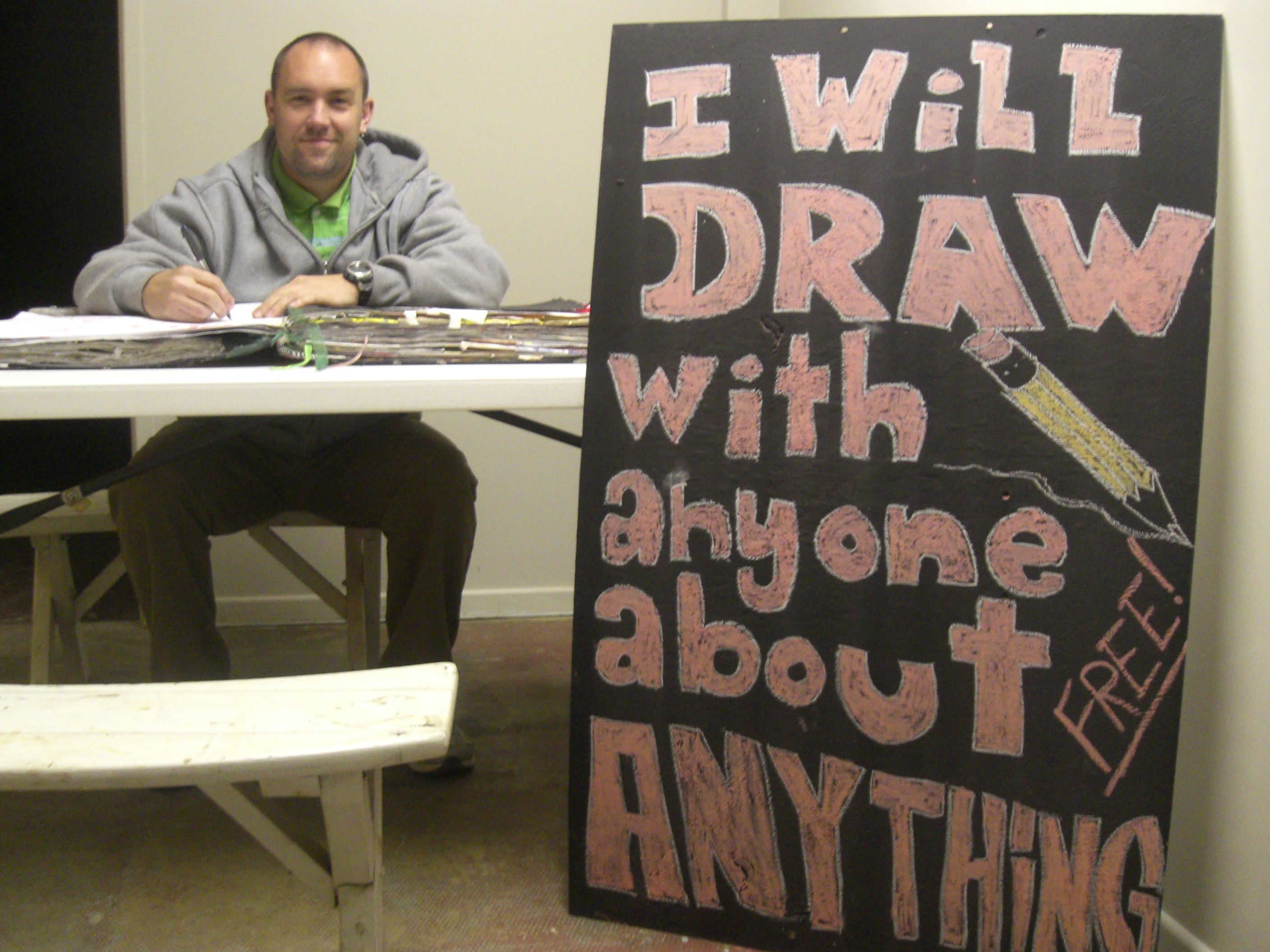
I set up this table in RAYGUN. When people approach I offer to draw with them about whatever they would like. If they don’t know what they want to draw about I keep a list of questions such as:
– how about this weather?
– what have you been up to lately?
– Whats your favorite color, I have a pen/pencil in that color?
– what are you doing after this?
– how are things?
This formula has led to drawings with all kinds of strangers on topics. The table is very popular.
Of course, you can do this yourself.
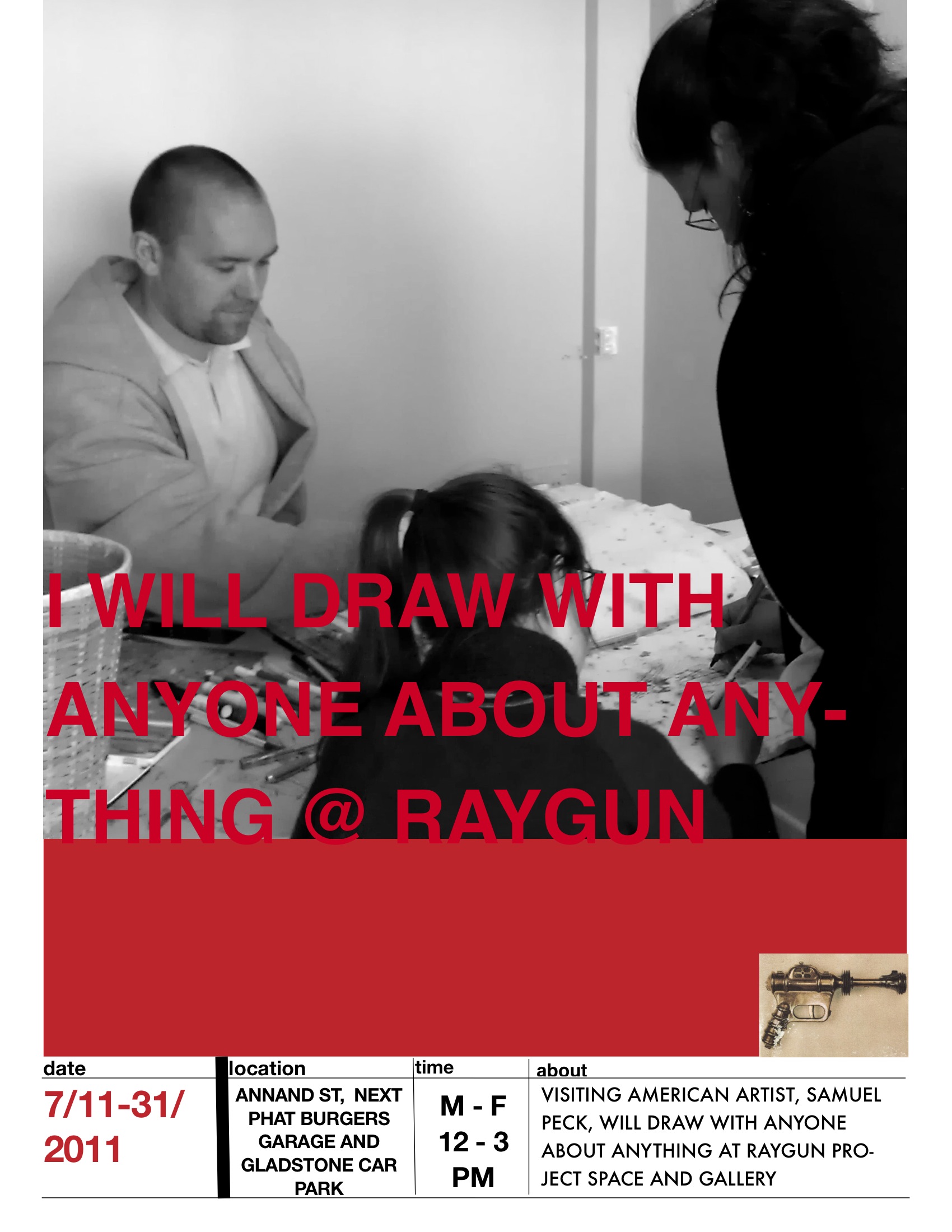
Stop by the table while you’re in downtown Toowoomba today we are right behind phat burgers. I will be there every weekday (M-F) for the rest of the month of July from 12 – 3.
Thanks and I hope you enjoy my homage to Steve Lambert,
Resident Artist
RAYGUN gallery
Check out Kyle Jenkins, painter, photographer, works on paper, musician, sculpture, architectural installation. http://www.kyleandrewjenkins.com/
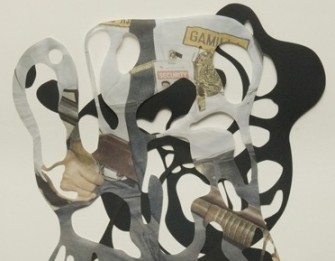
Kyle Jenkins Work on Paper
Cara Ann is a sound artist from Toowoomba and now living in Melbourne who’s embarking on a new and exciting sound project.
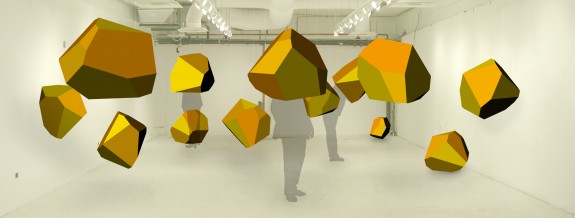
Cara Ann Simpson Sound Artist

Slack is extra—extra line in the rope. Slack is not keeping things tight. It means not pulling, or at least not pulling so much that you use up all the slack.
In animal training, slack is a reward. When a horse does what you want, you give it slack in the reins. You release the pressure, and that release is pleasure enough. This suggests that slack itself, having a bit of extra in your rope, is something to value.
If slack is extra, it is linked to waste. Bataille suggested that what we do with our waste, our “extra,” is what defines us. And he reminds us of the (problematic) relationship between excess, waste, and sacrifice.1
The kind of slack we’re talking most about here is the slack that means wasted time. And wasted time means time not given to the future. Time not put to use. To waste time is to be present. To simply be present is to waste time. If enough time is wasted in this way, (as Prayas Abhinav said) you are a buddha.2
At work, to slack is to strike. It is an act of refusal—the refusal to be used. Here I think you can find some of its political sting. Slacking is a kind of sabotage, like those dutch workers throwing their wooden shoes into the machines that enslaved them – wreckage as resistance. Slacking subtly wrecks the productive machine of work life, it slows it down, gums it up.
I met a poet in Prague once. He told me that before the revolution, writers and philosophers tried to get work tending the boilers in big buildings. They could sit in the basement, quietly reading and writing subversive tracts, shoveling coal from time to time as necessary. They sought out the work with the most slack, and with that slack they made their revolution……
read on at… http://salrandolph.com/text/71/notes-on-slack-or-a-declaration-of-uselessness
 RAYGUN